The cost of resurfacing a concrete pool comes down to four things: the finish you choose, the size of the pool, how much work the old surface needs before the new one goes on, and anything else done while the pool is empty. Pebble finishes cost the least of the rendered interiors, quartz and glass bead more, and a fully tiled interior the most.
The finish
| Finish | What it’s like | How it compares on price |
|---|---|---|
| Pebble | Hard-wearing and grippy underfoot; darker blends make the water look deeper | The least expensive rendered finish |
| Quartz | Finer and smoother, with even colour | More than pebble |
| Glass bead | Glass in the mix catches the light | The dearest rendered finish |
| Full tiling | Glass or porcelain mosaic over the whole interior; the longest-lasting surface | The most expensive option |
| Paint | Refreshes a sound, previously painted pool | The least expensive, with the shortest life |
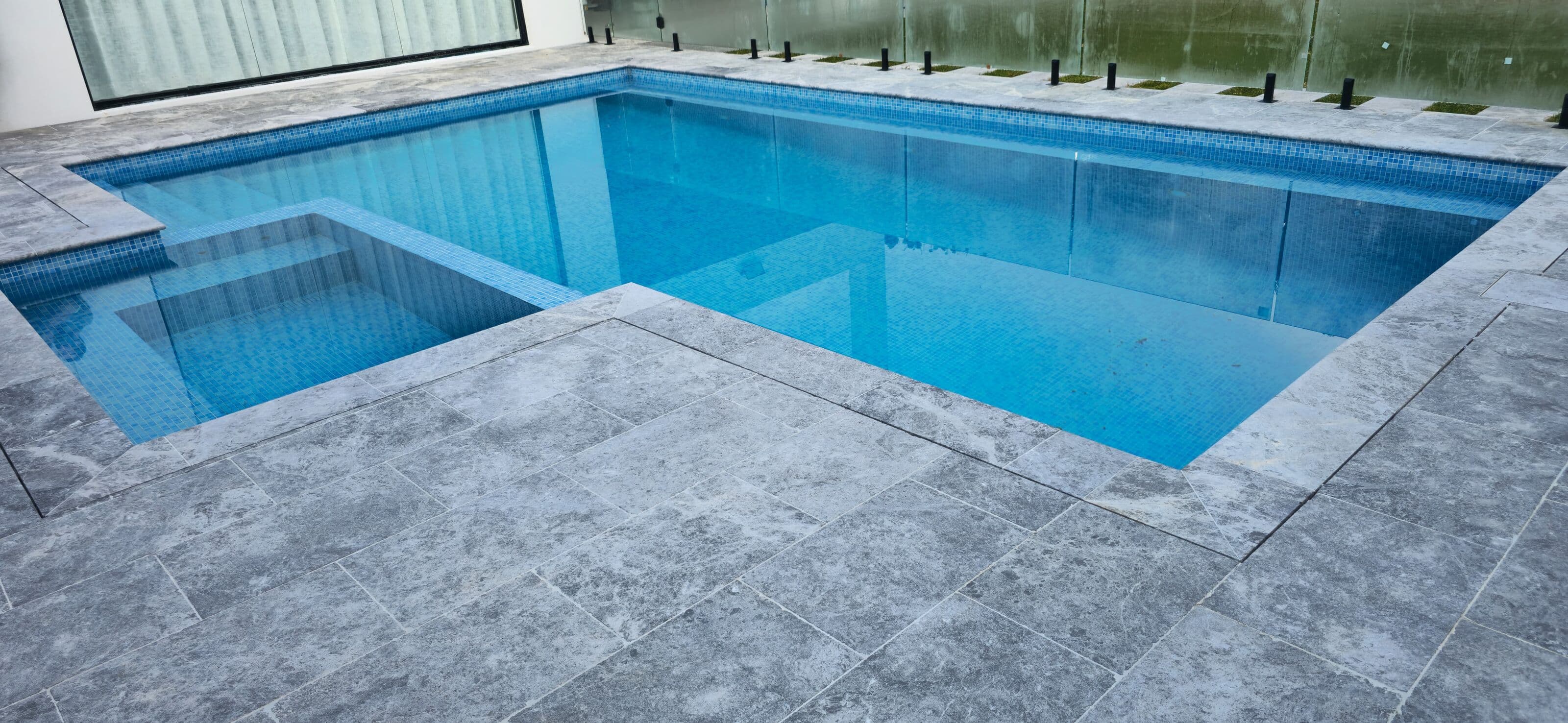
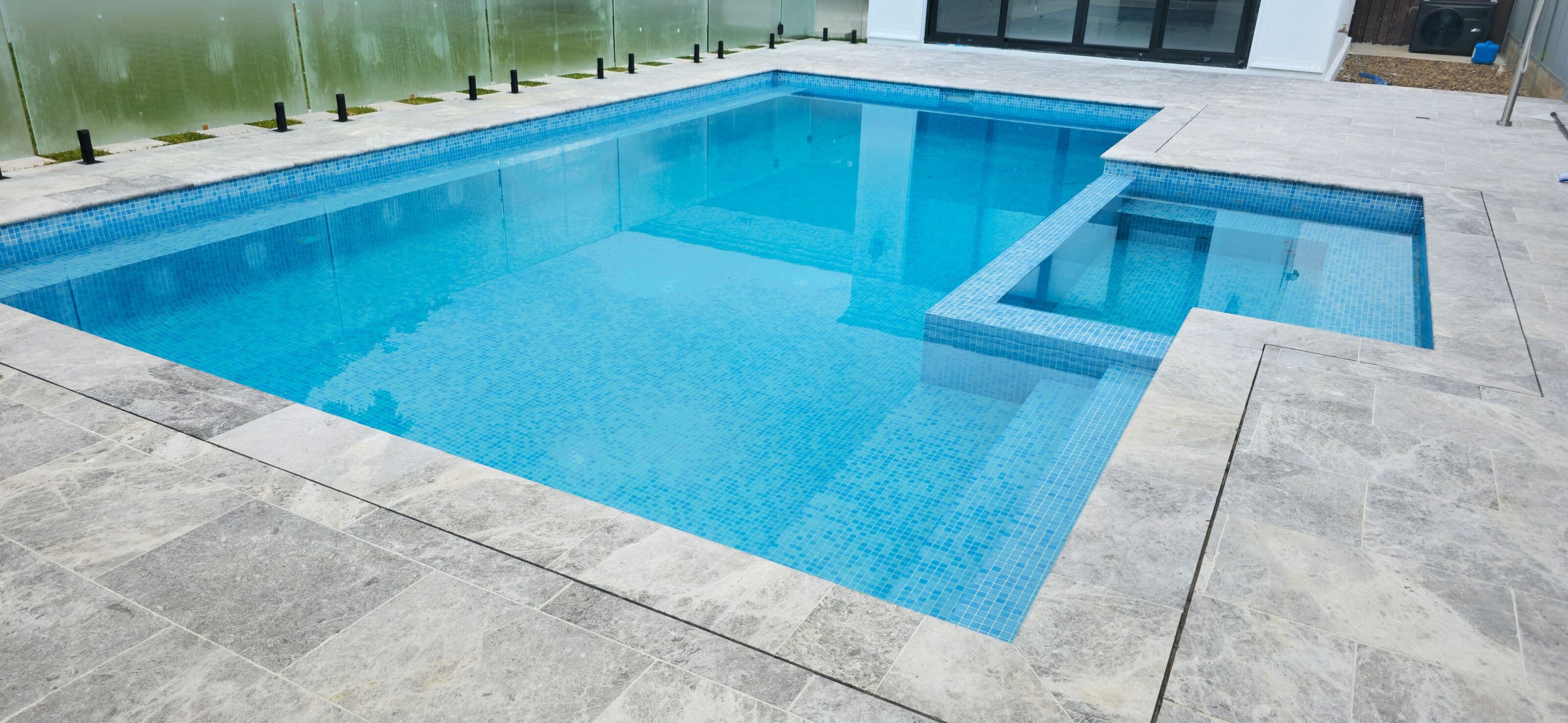 A square spa spilling into a glass mosaic pool
The size of the pool
Resurfacing is priced on the interior area: the floor, the walls, the steps and any bench seats. A small pool and a long family pool are very different jobs in material and labour, before anything else is counted.
The state of the old surface
This is where two quotes for the same pool can differ most:
- A painted pool has to be stripped back to sound render before a pebble or quartz finish will bond.
- Hollow or drummy render (it sounds hollow when tapped) has to be cut out and patched.
- Cracks are chased out and filled first, so they don’t show through the new surface.
- An older rendered surface in good condition only needs cleaning, acid washing and a bonding coat.
A quote should say which of these it includes. If one doesn’t, ask.
 A drained pool ready for repairs
What gets done while the pool is empty
Many owners do the waterline tiles and the coping at the same time, because the pool only has to be emptied once. Replacing tiles, coping or lights adds to the job, but costs less than doing it separately later. See our page on pool tiling and coping.
 Glass mosaic going onto the bench ledge while the pool is empty
How long it takes
From draining to refilling, resurfacing usually takes about one to two weeks, depending on the preparation, the finish and the weather. The new surface needs time to cure before the pool is filled and the water balanced.
Getting an accurate price
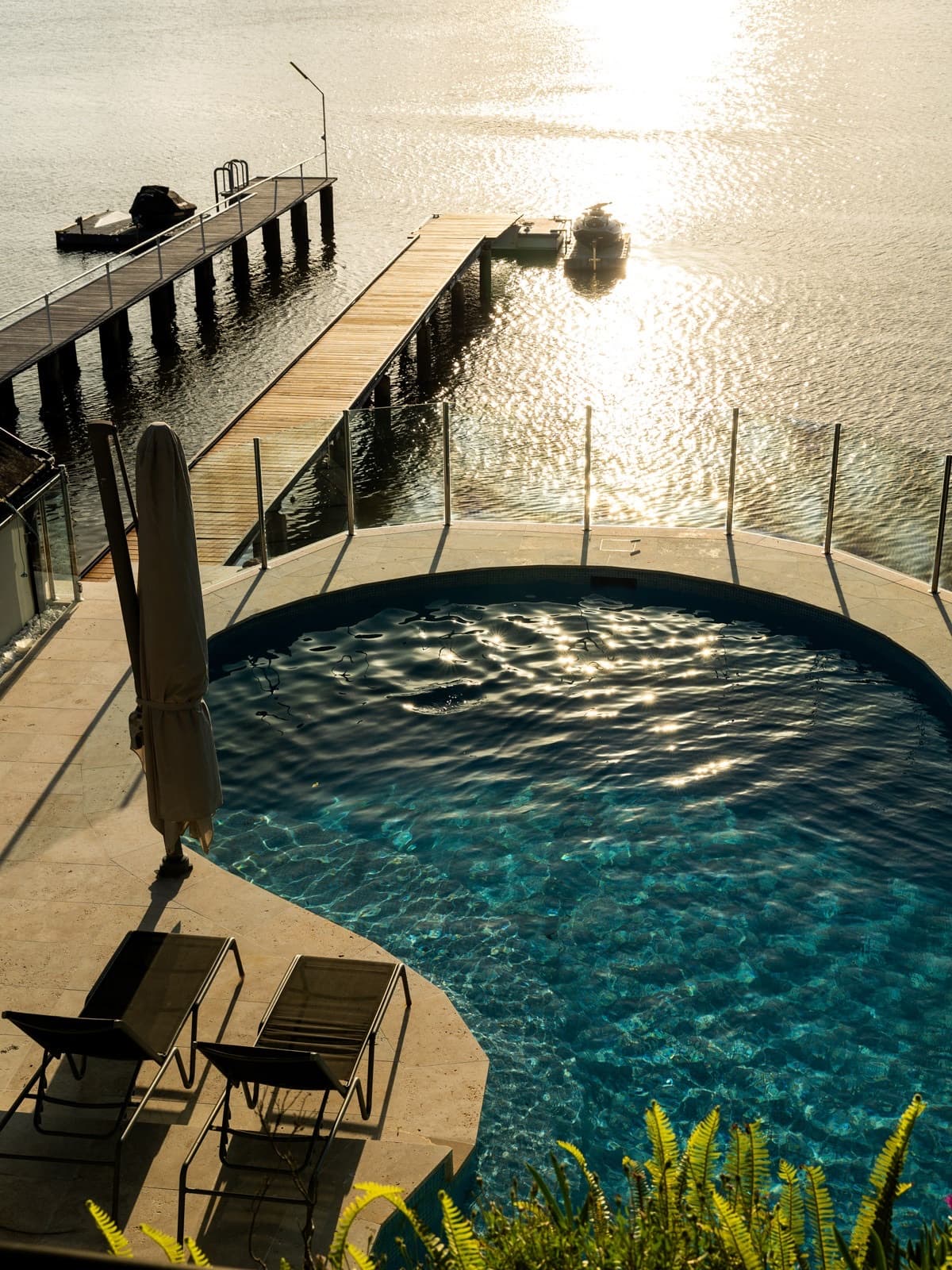
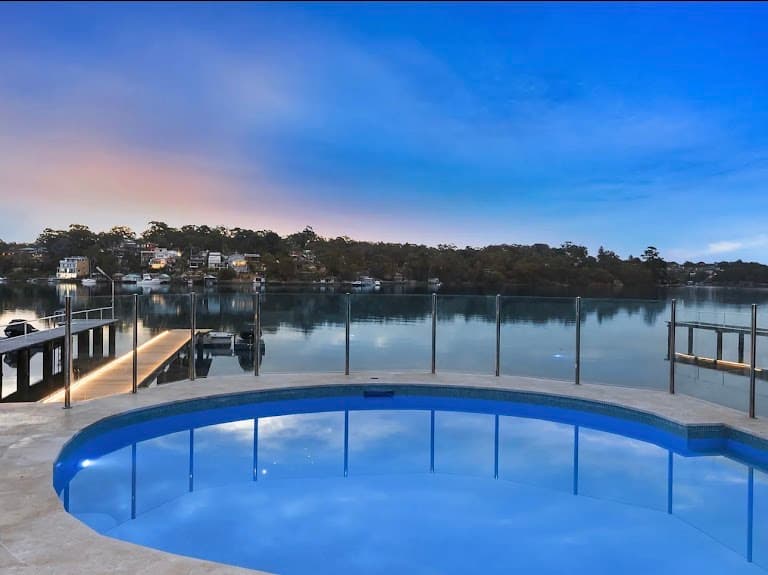
A price you can rely on needs someone to look at the pool: the surface, any cracks or hollow patches, and the tiles and coping. Photos help you get a first idea. More about our pool resurfacing, or see one of our jobs: the waterfront renovation in Church Point, and the choice of finishes in more detail.